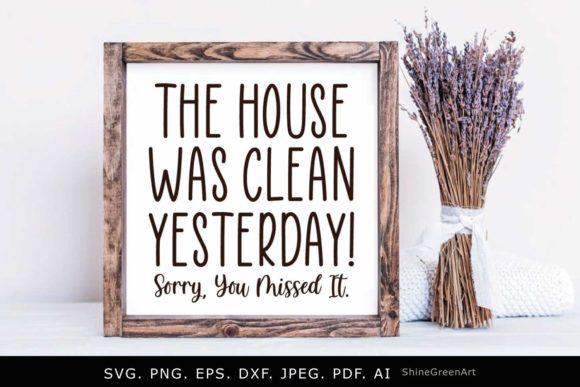
The House Was Clean Yesterday: A Designer Review
As a designer who has spent years translating digital files into tangible stitched goods, I know that the difference between a good product and a great one often lies in the nuance of the design. When I first encountered The House Was Clean Yesterday Funny Home, I didn't just see a witty phrase; I saw a potential staple for a craft business targeting busy parents and home decorators. The humor is relatable, but the real question for any serious maker is how this concept translates from a screen to fabric. Does it hold up under the scrutiny of a sewing machine? Is it versatile enough for a small shop product line?
First Impressions: Visual Weight and Layout
The initial visual impact of The House Was Clean Yesterday Funny Home is strong because it relies on typography rather than complex imagery. In the world of Graphics and Crafts, simple text-based designs are often the most forgiving for embroidery, provided the font choice is right. This design feels playful yet structured. It creates an immediate mood of lighthearted chaos, which is perfect for kitchen items or family apparel.
When reviewing the layout, I looked at how the words balance each other. For an embroidery project, spacing is critical. If the letters are too close, the fill stitch can merge, creating a muddy look. If they are too far apart, the design loses its punch. This particular file seems to offer a comfortable rhythm. It suggests that when converted to a machine embroidery design, the letterforms will maintain their integrity without requiring excessive stitch density adjustments. The visual personality is friendly, making it an ideal candidate for a personalized gift or a boutique item meant to spark a smile.
Real-World Application: From Tote Bags to Aprons
To truly evaluate a design, you have to imagine it on the finished product. Let's say you are preparing a custom embroidered tote bag for a local craft fair. You load your hoop with a sturdy canvas, and the design sits perfectly in the center. The House Was Clean Yesterday Funny Home works exceptionally well here because the message is large enough to be read from a distance, yet compact enough not to overwhelm the bag's surface area.
Consider a different scenario: a kitchen apron for a holiday gift. Here, the design fits naturally into the chest pocket area or the lower panel. The humor aligns perfectly with the function of the garment. As an Etsy seller or small shop owner, you want products that tell a story. This design tells a story every time someone wears it. It transforms a standard apron into a conversation starter. Similarly, if you were producing custom apparel like sweatshirts, this phrase would look fantastic across the back or on the sleeve, offering a modern take on traditional sweatshirt embroidery.
For those looking to expand into commercial embroidery, this asset is versatile. It could serve as the centerpiece for an embroidered patch sold individually or attached to denim jackets. The clean lines mean that even when scaled down for a cap or a hat, the readability remains intact, assuming the font weight is sufficient.
Navigating Technical Challenges and Fabric Choices
While the design is promising, a professional review requires addressing where things might go wrong. Not all fabrics are created equal, and The House Was Clean Yesterday Funny Home demands respect for material limitations.
- Small Hoop Sizes: If you attempt to fit this entire phrase into a 4x4 inch hoop, you risk compromising the legibility. The text may become too dense, causing thread breakage or puckering. Always check your hoop size compatibility before committing to a production run.
- Textured Fabrics: On highly textured materials like thick terry cloth or heavy knit sweaters, the fine details of the lettering can get lost. The running stitch outlining the text might sink into the loops of the fabric. In these cases, using a heavier stabilizer is non-negotiable.
- Dark Fabrics: While the design is clear, stitching white thread on black fabric requires precision. If the thread colors aren't contrasted correctly, the design can look fuzzy. Testing on a scrap piece of dark fabric is essential to ensure the fill stitch covers the background completely without showing through.
- Stretchy Materials: For baby embroidery or leggings, the stretch of the fabric can distort the straight lines of the text. Using a cutaway stabilizer instead of a tear-away one will help maintain the shape of the letters after washing.
Furthermore, be cautious with detailed corners in the typography. Sharp angles in text can sometimes cause the needle to skip or the thread to bunch up. If the specific font used in this file has very sharp serifs, you may need to adjust the stitch count slightly to smooth out the edges.
Practical Notes for Designers and Makers
If you decide to integrate The House Was Clean Yesterday Funny Home into your workflow, follow these practical steps to ensure a professional result:
- Test on Scrap Fabric: Never skip the test run. Stitch the design on a scrap piece of the actual fabric you intend to use. Check for puckering, thread tension issues, and overall clarity.
- Review Stitch Density: Open the embroidery file in your digitizing software. Ensure the fill density isn't too high, which can make the fabric stiff, or too low, which can leave gaps.
- Mockup Variations: Create printable mockups in both light and dark colorways. This helps you visualize how the design will look on different inventory items before you spend hours stitching them.
- Licensing Check: Since you are receiving this as a zipped folder containing SVG, PNG, EPS, DXF, JPEG, PDF, and AI formats, verify the license terms. Are you allowed to sell the finished product? Can you resell the digital embroidery file? Understanding these boundaries is crucial for any craft business.
- Stabilizer Selection: Match your stabilizer to the fabric weight. A mesh stabilizer might work for a tote bag design, while a fusible web might be better for an applique design variation.
Impact on Brand and Customer Trust
Ultimately, the value of The House Was Clean Yesterday Funny Home lies in its ability to connect with customers. In the crowded marketplace of handmade goods, a design that resonates emotionally stands out. When a customer sees this phrase on a pillow cover or a tea towel, they feel understood. That connection builds trust in your brand.
Using high-quality design assets like this elevates your presentation. It signals that you care about both the aesthetic and the functionality of your items. Whether you are selling at a craft fair or online, the professionalism of the stitching reflects directly on your reputation. If the text is crisp and the placement is balanced, customers perceive higher value.
This design is more than just a funny quote; it is a tool for engagement. It encourages social sharing, as people love to post photos of witty home decor. By incorporating it into your holiday embroidery collections or everyday basics, you tap into a market that appreciates humor and quality craftsmanship alike.
Final Thoughts on Usability
In conclusion, The House Was Clean Yesterday Funny Home is a robust option for designers looking to add personality to their portfolio. Its simplicity allows for versatility across various mediums, from caps to blankets. However, success depends on your attention to technical details like stabilizer choice and fabric texture. By taking the time to test and refine, you can turn this digital graphic into a standout handmade product that delights customers and supports your creative entrepreneurship.